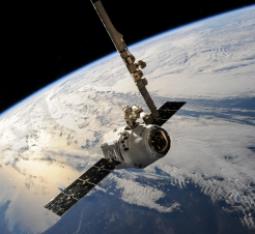
Startups and small businesses eagerly await the announcement of the selections for the government’s SBIR and STTR programs that provide important funding for their research. This past week NASA announced the recipients of these awards that will support space exploration missions. The selected proposals will be used to develop technologies in the areas of aeronautics, human space exploration and operations, science, and space technology.
The selections include 304 proposals to advance research and technology in Phase I of its 2018 Small Business Innovation Research (SBIR) program and 44 proposals for the Small Business Technology Transfer (STTR) program, totaling $43.5 million. The SBIR Phase I contracts are for six months and STTR Phase I contracts are for 13 months, each having a maximum funding of $125,000. SBIR Phase I work is the basis for determining follow-on SBIR Phase II work.
Selection for the SBIR/STTR awards is based on a range of factors, including technical merit and feasibility, the experience, qualifications and the submitting organization’s facilities, the work plan effectiveness and commercial potential. The goal of these awards is to involve small businesses and research institutions in the innovation process to address specific government research and development needs. They are an excellent vehicle for startups and early stage companies to gain funding for their innovations without giving up equity.
Key R&D areas addressed by the recent awards relating to space exploration include: superconducting technology used in high-power density motors for aircraft propulsion, a room temperature electrolyzer for generation of oxygen from carbon dioxide on Mars, a compact high-efficiency-high-power density Hall-effect thruster power processing unit, an oscillating heat pipe: — a passive heat transfer device — to improve a spacecraft’s thermal control system, onboard autonomous intelligent systems to manage future crewed and un-crewed spacecraft, and others.
In the press statement announcing the proposals Jim Reuter, acting associate administrator for NASA’s Space Technology Mission Directorate (STMD), stated, “This round of Phase I ideas look very promising and creative, and will enhance innovation throughout the Agency”.
The SBIR and STTR programs are managed for STMD by NASA’s Ames Research Center in California’s Silicon Valley.
Related posts:
- Small Business is the Big Winner in NASA SBIR Awards
- NIH Changes SBIR & STTR Submission Dates
- SBIR Impact NYC Announces Application Deadline for SBIR Grant Assistance
- NJIT Researcher Launches a Course on the Entrepreneurial Opportunities of Space Exploration
- Two Innovation Giants Collaborate on Next-Generation Lunar Vehicle for Space Exploration