The annual study was encouraging about small business prospects and their relationships with their banks, but also identified areas of weakness —specifically debt —that are of concern.
The just released J.D. Power 2025 U.S. Small Business Banking Satisfaction Study shows that small business owners are increasingly positive about their businesses and the economy, and this sentiment extends to their banking relationships.
However, the study also highlights rising financial vulnerability, including concerns about debt, creditworthiness, and external economic pressures, which banks should address proactively.
Overall satisfaction with primary banks has risen by 11 points on a 1,000-point scale this year, indicating that small businesses are generally pleased with their banking services due to improvements in financial health support and communication, which saw score gains of 17 and 16 points, respectively.
Insight Sought
The study found that 61% of small businesses received financial advice from their primary banks this year, and 94% of those recipients reported that the counsel they received positively influenced their business’ financial habits.
This proactive support is building loyalty and strengthening the critical relationship between the small business owner and their bank.
“The good news is that 54% of small business owners are financially healthy,” noted Paul McAdam, senior director of banking and payments intelligence at J.D. Power. “And they increasingly feel like their banks are helping them meet their business credit and borrowing needs and savings goals.”
Banks have also made significant progress in problem resolution, with scores rising 89 points since the study’s 2022 redesign. Ninety percent of small businesses reported their most recent issue was resolved successfully, which has contributed to higher overall satisfaction.
The study also highlights the value of dual account relationships. Eighty-four percent of small business banking customers also hold a personal account with the same bank, and their satisfaction scores are 64 points higher than those without a dual relationship. This indicates that serving both personal and business needs fosters deeper trust.
Looming Concerns: Debt and Creditworthiness
Despite higher satisfaction scores, the study warns of underlying financial challenges for many small businesses. Emerging concerns about debt management may affect future lending and growth.
- Credit Score Decline: The proportion of business owners who report having an excellent credit score has fallen to 35%, the lowest level observed in four years.
- Late Payments: The percentage of small businesses who are able to pay all of their bills on time is down 2 percentage points from a year ago, now standing at 57%.
This financial strain is intensified by ongoing concerns about external economic factors that small business owners believe could significantly impact their operations:
| Inflation | 50% |
| Tariffs | 37% |
| Interest Rates/Cost of Borrowing | 37% |
| Supply Chain | 33% |
| Retaining/Hiring Employees | 27% |
“However, with 50% of business owners still concerned about inflation, 37% anticipating a potentially significant effect from tariffs and 37% expressing uncertainty about interest rates and the cost of borrowing, some serious issues are still looming,” McAdam cautioned. He stressed that banks that proactively communicate and offer helpful advice are “best positioned to build customer loyalty and protect these critical relationships.”
2025 Study Rankings
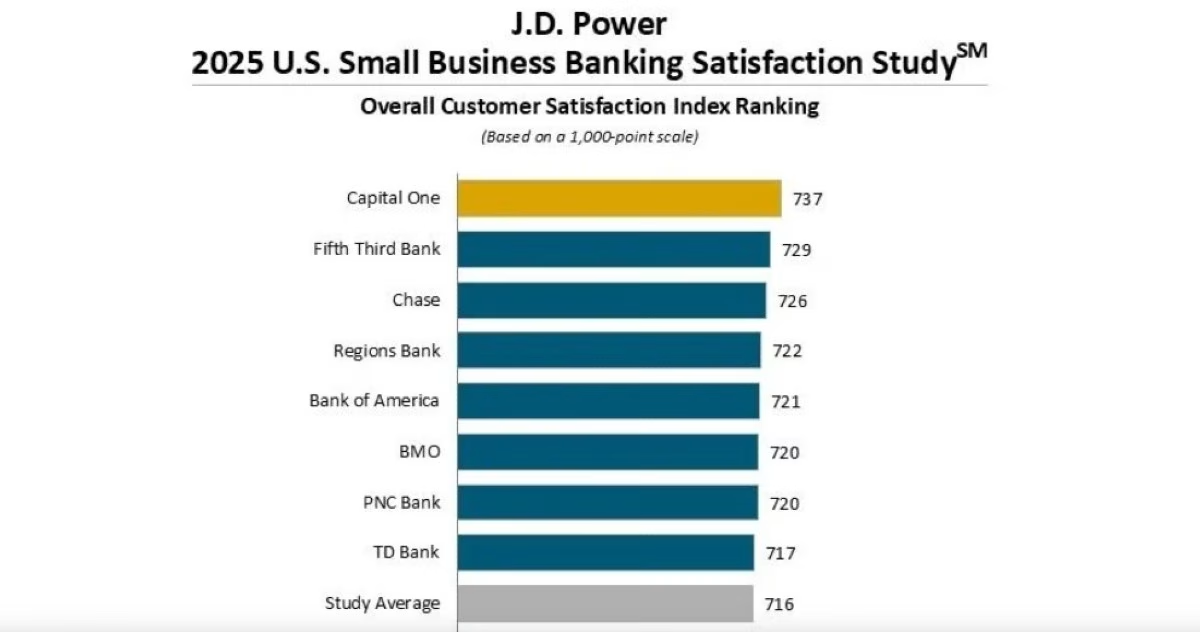
For the third year in a row, Capital One leads in small business banking customer satisfaction with a score of 737. Fifth Third Bank and Chase follow with scores of 729 and 726.
The J.D. Power 2025 U.S. Small Business Banking Satisfaction Study is based on responses from 6,589 owners or financial decision-makers at small businesses that use business banking services. Satisfaction is measured across seven weighted factors, in order of importance: level of trust; people; allowing me to bank how and when I want; account offerings; helping me save time or money for my business; digital channels; and resolving problems or complaints.
The study shows that while small business owners value strong service from their banks, institutions must remain attentive and responsive to financial pressures and debt concerns that could affect their customers’ well-being.
Related posts:
- Dcode Seeks Applicants for Fintech and Blockchain Accelerator Focused on Government Work
- Susan G. Komen Announces Inaugural Crowdfunding Initiative for Metastatic Breast Cancer Research
- Gig Economy Fair Wages Addressed by GoShare with Fair Hourly Pay
- Benitago Group Gains Sizeable $325 Million Series A Funding, Furthering Portfolio’s Success
- Treat Each One Like Gold: The Power of Kiva Zip in the U.S.