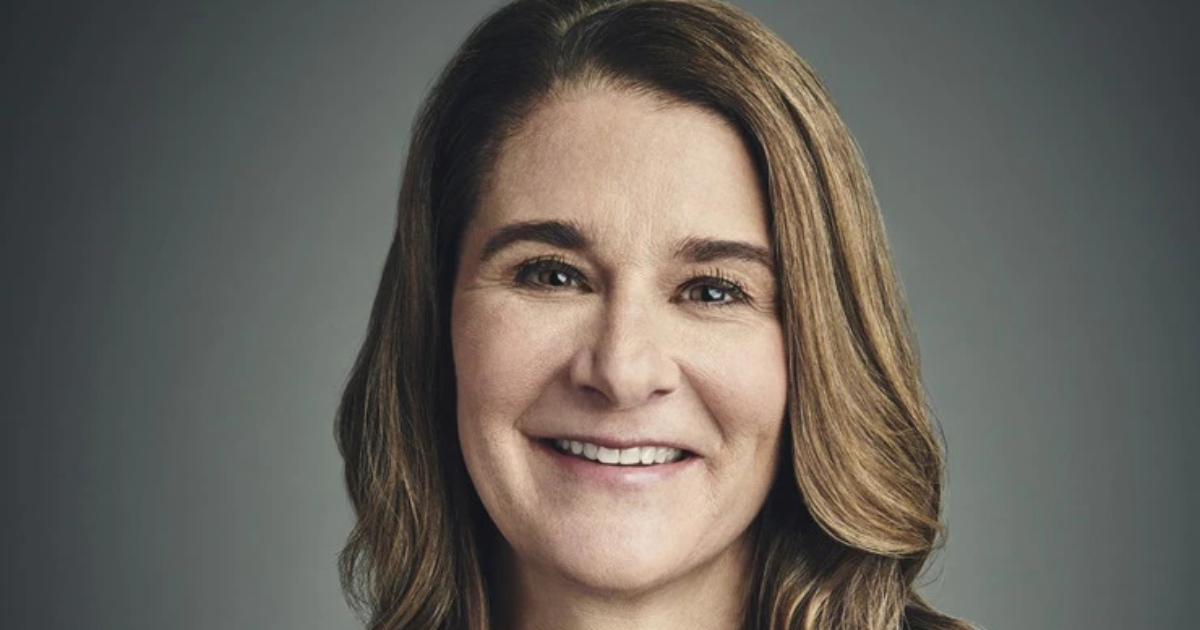
Melinda French Gates is concerned about women. From their health to their careers, she continues to speak forcefully about the important changes that are needed to improve women’s lives. In her recent post as Co-chair of the Bill & Melinda Gates Foundation, she reaches out to leaders around the world asking them to support gender equality. In her post titled “With the economic recovery failing women, now is the time to act on gender equality,” she urges actions be taken during the emerging economic recovery to specifically counter the pandemic’s impact on women.
The Bill & Melinda Gates Foundation is doing its part with a sizeable $2.1 billion donation to women-focused organizations over the next five years. The funds will serve to accelerate “women’s economic empowerment, strengthen women and girls’ health and family planning, and support women’s leadership”. One beneficiary is the Women’s Funding Network that is a community of over 120 women’s funds and foundations spanning 14 countries. Melanie Brown, Vice-Chair and Senior Program Officer of the Bill & Melinda Gates Foundation and Ada Williams Prince, Senior Advisor, Program Strategy and Investment at Pivotal Ventures are Board Members of the Network.
French Gates brings to the forefront the studies that make clear the pandemic’s disproportionate impact on women. One reveals that twice as many women as men lost their jobs during the pandemic, resulting in the term “shecession” being coined. Another, that keeps her concern high, is the current trend of men readily regaining the jobs they lost but not women, as seen in a report prepared by the International Labor Organization (ILO). Also, “2 million more women are expected to leave the workforce this year, adding to the 13 million in 2020”, reflecting the difficult economic challenges women face going forward.
Her most recent public post presents the complexity of improving women’s lives and also addresses the pandemic’s impact on women. For instance, she shares that because more women work in service industries they were greatly impacted by the pandemic due to social distancing and lockdowns. Yet, its effect was even greater because in the service industries typically women hold lower paying jobs. Compounding these challenges is the role women have in their households doing unpaid work such as cleaning, cooking, and child-rearing. They take a supportive role to those who have paid work, according to economists, resulting in their contributions to society not being economically recognized. This is a fundamental challenge to gaining gender equality.
These challenges that French Gates pens about are not just part of the “shecession.” They are indicative of an opportunity gap that is a broader and deeper hurdle for women to overcome. She is seeking policies that will directly address these disparities. She advocates for cash transfer programs that would not only lift 100 million women out of poverty, but would add $3 trillion to global GDP if they are given access to childcare. McKinsey reports that putting women at the center of recovery efforts would grow global GDP by an estimated $13 trillion, or 16%, by 2030. Studies and statistics that support this approach need to be acted upon.
French Gates advocates for “gender equality as an economic necessity”, but progress remains slow and hard fought, citing the Generation Equality Forum held in Paris just this past week. Leaders again gathered together to address gender equality, but she notes that the many promises made in 1995 at the Beijing Conference on Women remain unfulfilled after 26 years. “Women’s rights are human rights” was declared at the time and leaders pronounced they would “take all necessary measures to eliminate all forms of discrimination against women”.
In 2015 she established Pivotal Ventures, an investment and incubation company to advance social progress in the United States. This is her personal commitment to confront political, cultural and institutional obstacles based on who people are rather than the merits of what they do.
For women to fully participate in the emerging economic recovery and to gain gender equality, she identifies three areas of focus:
- Cash: Assuring that recovery, stimulus, and social protection money gets directly into women’s hands,
- Care: Subsidizing child care centers or implementing paid family and medical leave rather than expecting women to do it all and unpaid, and
- Data: Making the invisible visible so that leaders and policymakers can pinpoint the needs of women and girls to develop evidence-based reforms, and monitor progress.
French Gates emphasizes that only by giving women real opportunities in the U.S. and around the world will full recovery occur. Policies are needed to achieve that goal that remove key barriers to gender equality that: increase employment for women, give them opportunities for entrepreneurship, and provide access to child and family care, as well as health services.
“The impact of these policies would be massive,” she says.
But greater progress still depends on leaders who are predominately male, so French Gates strongly advocates for more women to be in leadership positions.
“The only way to choose a different future is to guarantee that women are in the rooms where pivotal decisions get made.” French Gates says.
Read about the Catalyst CEO Champions For Change Shows Real Progress Occurring for Women Moving into Leadership Positions
Related posts:
- Melinda French Gates Puts Focus on Women Candidates in upcoming Midterm Elections
- Commitment to Gender Equality Recognized in 2020 Bloomberg Gender-Equality Index
- French American Digital Lab Calls for Entrepreneurs Seeking Entry to French Markets
- Diversity and Gender Equality Remain a Major Challenge in Automotive Workforces, Deloitte and Automotive News Reports
- 2022 Bloomberg Gender-Equality Index Shows Significant Gains with Growing Global Participation